


The Spanish Untouchables
-
[image: Busto del Rey Juan Carlos I de España en su vi...]
A new tell-all book that details what led to Spanish king Juan Carlos
giving up the throne wou...
UK Jobseekers who reject help for alcohol and drug addiction face benefits cut
Wednesday, 23 May 2012
Unemployed people suspected of suffering from alcoholism or drug addiction will have their benefits cut if they refuse treatment for their condition, the work and pensions secretary, Iain Duncan Smith, will signal on Wednesday. In a sign of the government's new benefits regime, which lies at the heart of Duncan Smith's cost-cutting welfare changes, staff in Jobcentre Plus offices will be encouraged to cut the jobseeker's allowance of claimants who reject treatment for addiction. The new rules will come into place in October 2013 when the universal credit, which is designed to wrap benefits into one payment, is introduced. A new claimant contract lies at the heart of the universal credit reforms. Claimants will have to sign a contract in which they agree to look for work in exchange for an undertaking from the government to support them while they do so. Government sources said the contract would allow Jobcentre Plus staff to say that a suspected addict is in breach of their commitments if they refuse help for alcoholism or drug addiction. Duncan Smith will give a flavour of the new rules when he addresses an event in parliament organised by Alcoholics Anonymous (AA). He will say: "The outdated benefits system fails to get people off drugs and put their lives on track. We have started changing how addicts are supported, but we must go further to actively take on the devastation that drugs and alcohol can cause. "Under universal credit we want to do more to encourage and support claimants into rehabilitation for addiction and starting them on the road to recovery and eventually work. Getting people into work and encouraging independence is our ultimate goal. Universal credit will put people on a journey towards a sustainable recovery so they are better placed to look for work in future and we will be outlining our plans shortly." It is understood that the work and pensions secretary will not make a formal announcement on Wednesday of the powers that will be handed to Jobcentre Plus staff. Duncan Smith wants to use the event to focus on what he regards as the positive work AA does in helping to treat alcoholism. A government source said: "Iain wants to focus on the brilliant work Alcoholics Anonymous does in changing people's lives. He really wants to encourage people who have drink problems to go to AA for treatment. It will transform their lives and will help them into work." The source said Duncan Smith believes it is right to give jobcentre staff powers to cut benefits if an addict refuses treatment because they can detect signs of trouble. The source said: "The universal credit will allow staff in Jobcentre Plus offices to say: this person has been unemployed for some time. The staff know if people are addicted to alcohol. They know the people they are dealing with. "But we want this to be positive and to be about signposting people to superb organisations that can help them. This is about changing their lives. It is very important to support addicts into the workplace." But if claimants refuse they will have their benefits docked. "There will be sanctions," the source said, citing cuts to the jobseeker's allowance as an example. Ministers believe that one indicator Jobcentre Plus staff can use to see whether a claimant is an addict is the amount of times they apply for a crisis loan. "If you are applying for that up to 10 times a year then that is a sign of a chaotic life," one source said. Analysis by the Department of Work and Pensions shows that almost 40,000 people claim incapacity benefit with alcoholism declared as their "primary diagnosis". Of these, 13,500 have been claiming for a decade or more. There are about 160,000 "dependent drinkers" in England who receive one or more of the main benefits. There are 1m violent crimes a year that are related to alcoholism and 1.2m admissions to hospitals a year related to alcoholism. Universal credit is the most important element of Duncan Smith's welfare reforms, developed during his years in opposition through his Centre for Social Justice, which is designed to achieve his central goal of encouraging people into work. It will integrate tax credits and out-of-work benefits into one payment, with the aim of smoothing the transition to work. Labour has given the universal credit a cautious welcome, though it has taken issue with the scale of benefit cuts. Lord Low of Dalston, the vice-president of the Royal National Institute of Blind People who sits as a crossbencher, told peers this year: "Though it has some very sensible and progressive things at its core, in the shape of the universal credit, nevertheless it goes too far to most people's consciences in the way in which it takes vital support away from some of the most needy in our society."
0
comments
The US treasury department has put two sons of Mexico's most wanted man Joaquin "El Chapo" Guzman on its drugs kingpin blacklist. The move bars all people in the US from doing business with Ivan Archivaldo Guzman Salazar and Ovidio Guzman Lopez, and freezes any US assets they have. Joaquin Guzman, on the list since 2001, runs the powerful Sinaloa drug cartel. Mexico has seen an explosion of violence in recent years as gangs fight for control of trafficking routes. The US administration "will aggressively target those individuals who facilitate Chapo Guzman's drug trafficking operations, including family members," said Adam Szubin, director of the department's Office of Foreign Assets Control . "With the Mexican government, we are firm in our resolve to dismantle Chapo Guzman's drug trafficking organisation." Ovidio Guzman plays a significant role in his father's drug-trafficking activities, the treasury department said. Ivan Archivaldo Guzman was arrested in 2005 in Mexico on money-laundering charges but subsequently released. As well as the Guzman brothers, two other alleged key cartel members, Noel Salgueiro Nevarez and Ovidio Limon Sanchez, were listed under the Foreign Narcotics Kingpin Designation Act. They were both arrested in Mexico in 2011 and are still in custody. Under the Kingpin Act, US firms, banks and individuals are prevented from doing business with them and any assets the men may have under US jurisdiction are frozen. More than 1,000 companies and individuals linked to 94 drug kingpins have been placed on the blacklist since 2000. Penalties for violating the act range include up to 30 years in prison and fines up to $10m (£6m). The US has offered a reward of up to $5m a for information leading to the arrest of Joaquin Guzman, who escaped from a Mexican prison in 2001.
The UK should stop wasting money on policing minor drugs offences and decriminalise the possession of drugs, comedian Russell Brand said yesterday. The flamboyant film star, who told MPs reviewing the Government’s drugs strategy that he had beaten his heroin addiction, said some people could safely take drugs and he was not promoting a “just say no” message. But he called for more help and support for those with the “condition of addiction”. Brand, who has been arrested a dozen times over his drug use, said the legal status of drugs was “irrelevant, at best an inconvenience” and being arrested was just an “administrative blip”. Asked for his views on spending less money on the policing of possession offences, Brand said: “I think that’s a brilliant idea. “Penalising people for possession of drugs is costly and expensive. “A good number of times I was arrested was simply for possession and the administrative costs of that would be better spent, I think, on education and addressing the costs of treatment.” Saying he backed decriminalisation, he said of addiction: “The criminal and legal status, I think sends the wrong message, but I wouldn’t start banging a drum to make drugs legal. I don’t take any drugs and I don’t drink because for me they’re bad. “We need to recognise the distinction that certain people have a condition or a tendency that drugs and alcohol are going to ruin their lives. We need to identify those people and offer them the correct treatment.” He added: “Making it illegal is not working anyway. Brand – who arrived at the packed hearing wearing a black hat, gold chains and crosses, and a torn black vest top with jeans – spoke rapidly as he addressed members of the Commons Home Affairs Select Committee by their first names. He called MPs “mate” and, when Labour MP David Winnick told him the committee was not a variety show, Brand replied: “You’re providing a little bit of variety though, making it more like Dad’s Army.” Chip Somers, chief executive of the detox centre Focus 12 where Brand sought help with drug dependency, said: “I think there’s an awful lot of money wasted on small-time possession of small amounts of drugs which is just part and parcel of the daily hustle and bustle of using.”
Eight American soldiers died of overdoses involving heroin, morphine or other opiates during deployments in Afghanistan in 2010 and 2011, according to U.S. Army investigative reports. The overdoses were revealed in documents detailing how the Army investigated a total of 56 soldiers, including the eight who fell victim to overdoses, on suspicion of possessing, using or distributing heroin and other opiates. At the same time, heroin use apparently is on the rise in the Army overall, as military statistics show that the number of soldiers testing positive for heroin has grown from 10 instances in fiscal year 2002 to 116 in fiscal year 2010. Army officials didn't respond to repeated requests for comment on Saturday. But records from the service's Criminal Investigation Command, obtained by the conservative legal group Judicial Watch, provided glimpses into how soldiers bought drugs from Afghan juveniles, an Afghan interpreter and in one case, an employee of a Defense Department contractor, who was eventually fired. The drug use is occurring in a country that is estimated to supply more than 90% of the world's opium, and the Taliban insurgency is believed to be stockpiling the drug to finance their activities, according to a 2009 U.N. study. While the records show some soldiers using heroin, much of the opiate abuse by U.S. soldiers in Afghanistan involves prescription drugs such Percocet, the Army documents show. Judicial Watch obtained the documents under the Freedom of Information of Act and provided them to CNN. Spokesman Col. Gary Kolb of the International Security Assistance Force, the NATO-led command in Afghanistan, verified the documents to CNN on Saturday. One fatal overdose occurred in June 2010 at Forward Operating Base Blessing, after a soldier asked another soldier to buy black tar opium from a local Afghan outside the base's entry control point. The first soldier died after consuming the opium like chewing tobacco and smoking pieces of it in a cigarette, the documents show. The reports even show soldier lingo for the drug -- calling it "Afghani dip" in one case where three soldiers were accused of using the opiate, the Army investigative reports show. The United States has 89,000 troops in Afghanistan. The U.S. death toll since the September 11, 2001, attacks that triggered the war has risen to more than 1,850, including 82 this year, according to the U.S. Department of Defense and U.S. Central Command. Tom Fitton, president of Judicial Watch, said his group was interested in soldiers' drug use partly because the risk was present during the Vietnam War. "You never want to see news of soldiers dying of drug use in Afghanistan," Fitton said. "Our concern is, will the military treat this as the problem that it is, and are the families of the soldiers aware of the added risk in this drug-infested country? "There is a dotted line between the uses. Prescription abuse can easily veer into heroin drug use," Fitton added. "Afghanistan is the capital of this opiate production and the temptation is great there and the opportunity for drug use all the more." The group is concerned that "there hasn't been enough public discussion, and we would encourage the leadership to discuss or talk about this issue more openly," Fitton said. In one case, a soldier bought heroin and the anti-anxiety drug Xanax from five "local national juveniles at multiple locations on Camp Phoenix, Afghanistan, and consumed them," one report states. Soldiers also distributed heroin, Percocet and other drugs among themselves, according to the reports. Another soldier fatally overdosed in December 2010 after taking several drugs, including morphine and codeine, though the drugs were not prescribed for him, the Army documents show. One female soldier broke into the Brigade Medical Supply Office at Forward Operating Base Shank and stole expired prescription narcotics including morphine, Percocet, Valium, fentanyl and lorazepam, the documents show. The investigative reports show soldiers using other drugs, including steroids and marijuana, and even hashish that was sold to U.S. servicemen by the Afghan National Army and Afghan National Police personnel, the reports state.

Archaeologists recently found a 2,700-year-old pot stash, so we know humans have been smoking weed for thousands of years. But it was only about 20 years ago that neuroscientists began to understand how it affects our brains.
Scientists have known for a while that the active ingredient in cannabis was a chemical called delta-9-tetrahydrocannabinol, or THC for short. Ingesting or smoking THC has a wide range of effects, from the psychoactive "getting high" to the physiological relief of pain and swelling. It also acts as both a stimulant and depressant. How could one substance do all that?
 Meet the cannabinoid receptor
In the 1980s and 90s, researchers identified cannabinoid receptors, long, ropy proteins that weave themselves into the surfaces of our cells and process THC. They also process other chemicals, many of them naturally occurring in our bodies. Once we'd discovered these receptors, we knew exactly where THC was being processed in our bodies and brains, as well as what physical systems it was affecting. Scattered throughout the body, cannabinoid receptors come in two varieties, called CB1 and CB2 - most of your CB1 receptors are in your brain, and are responsible for that "high" feeling when you smoke pot. CB2 receptors, often associated with the immune system, are found all over the body. THC interacts with both, which is why the drug gives you the giggles and also (when interacting with the immune system) reduces swelling and pain.
Cannabinoid receptors evolved in sea squirts about 500 million years ago; humans and many other creatures inherited ours from a distant ancestor we share with these simple sea creatures. THC binds to receptors in animals as well as humans, with similar effects.
Tasty, tasty, tasty
Cannabis notoriously makes people hungry - even cancer patients who had lost all desire to eat.One study showed that cancer patients who thought food smelled and tasted awful suddenly regained an ability to appreciate food odors after ingesting a THC compound. There are CB1 receptors in your hypothalamus, a part of your brain known to regulate appetite, and your body's own cannabinoids usually send the "I'm hungry" message to them. But when you ingest THC, you artificially boost the amount of cannabinoids sending that message to your hypothalamus, which is why you get the munchies.
Understanding this process has actually led to a new body of research into safe diet drugs that would block those cannabinoid receptors. That way, your hypothalamus wouldn't receive signals from your body telling it to eat, and would reduce hunger cravings in dieters.
What you're forgetting
What's happening in your brain when smoking pot makes you forget what you're saying in the middle of saying it? According to the book Marijuana and Medicine (National Academies Press):
One of the primary effects of marijuana in humans is disruption of short-term memory. That is consistent with the abundance of CB1 receptors in the hippocampus, the brain region most closely associated with memory. The effects of THC resemble a temporary hippocampal lesion.
That's right - smoking a joint creates the effect of temporary brain damage.
What happens is that THC shuts down a lot of the normal neuroprocessing that goes on in your hippocampus, slowing down the memory process. So memories while stoned are often jumpy, as if parts are missing. That's because parts literally are missing: Basically you are saving a lot less information to your memory. It's not that you've quickly forgotten what's happened. You never remembered it at all.
 A bit of the old timey wimey
Cannabis also distorts your sense of time. THC affects your brain's dopamine system, creating a stimulant effect. People who are stoned often report feeling excited, anxious, or energetic as a result. Like other stimulants, this affects people's sense of time. Things seem to pass quickly because the brain's clock is sped up. At the same time, as we discussed earlier (if you can remember), the drug slows down your ability to remember things. That's because it interferes with the brain's acetylcholine system, which is part of what helps you store those memories in your hippocampus. You can see that system's pathway through the brain in red in the illustration at left.
In an article io9 published last year about the neuroscience of time, we noted:
The interesting thing about smoking pot is that marijuana is one of those rare drugs that seems to interact with both the dopamine and the acetylcholine system, speeding up the former and slowing down the latter. That's why when you get stoned, your heart races but your memory sucks.
It's almost as if time is speeding up and slowing down at the same time.
Addiction and medicine
Some experts call cannabis a public health menace that's addictive and destroys lives by robbing people of ambition. Other experts call it a cure for everything from insomnia to glaucoma, and advocate its use as a medicine. The former want it to be illegal; the latter want it prescribed by doctors. Still other groups think it should be treated like other intoxicants such as alcohol and coffee - bad if you become dependent on it, but useful and just plain fun in other situations.
What's the truth? Scientists have proven that cannabis does have medical usefulness, and the more we learn the more intriguing these discoveries become. Since the early 1980s, medical researchers have published about how cannabis relieves pressure in the eye, thus easing the symptoms of glaucoma, a disease that causes blindness. THC is also "neuroprotective," meaning in essence that it prevents brain damage. Some studies have suggested that cannabis could mitigate the effects of Alzheimer's for this reason.
At the same time, we know that THC interferes with memory, and it's still uncertain what kinds of long-term effects the drug could have on memory functioning. No one has been able to prove definitively that it does or does not erode memory strength over time. Obviously, smoking it could cause lung damage. And, like the legal intoxicant alcohol, cannabis can become addictive.
Should cannabis be illegal, while alcohol flows? Unfortunately that's not the kind of question that science can answer. Let's leave the moral questions to courts, policymakers and shamans. I'll be off to the side, smoking a joint, thinking about my acetylcholine system and the many uses of the hippocampus.
What started as an undercover cocaine buy in Jeffersonville turned into 21 people being charged in a cocaine trafficking ring, with the leader based out of Sellersburg. That leader, Jesse K. Bottoms Sr., 47, pleaded guilty and was sentenced to 14 years in prison Thursday. Assistant U.S. Attorney Josh Minkler, lead prosecutor in the case, said it started when an undercover operative purchased one ounce of cocaine from Bottoms in 2008. The investigation continued for two years, prior to charging 21 people, with nine of those from Clark and Floyd counties. “We thought the investigation would be more successful if we could take away everyone involved, instead of one person who would be replaced the next day,” Minkler said. Fifteen people have pleaded guilty, including Bottoms, and have been sentenced. Another three have filed petitions to enter a guilty plea and are awaiting sentencing, according to the U.S. Attorney’s Office. “The evidence in this case was overwhelming,” Minkler said, explaining that is the reason behind the plea agreements. Minkler said there were recorded phone conversations, drugs seized, officers who witnessed the drug deals and more. “I’ve seen better cases, but not many,” Minkler said of the evidence. A total of 10 ounces of cocaine, $82,000 in cash and 30 firearms, including two AR-15 assault rifles, were recovered during this investigation. Minkler said Bottoms had to forfeit $37,568 once arrested and 80 percent of that will be given to local law enforcement. Minkler said it helps make the drug dealers pay for the investigation. All but three defendants were charged with conspiracy to possess with intent to distribute and to distribute five kilograms or more of a mixture or substance containing a detectable amount of cocaine. The remaining three people were Bottoms’ ex-wife, who lived with him, Nia Bottoms, 45, and his son Jesse Bottoms Jr., 22, both of Sellersburg, and Amber N. Tucker, 24, of Clarksville. Nia and Tucker were charged with one count of knowingly and intentionally using a communication facility to facilitate the commission of an act constituting a felony. Bottoms’ son was charged with one count of transferring a firearm, knowing that the firearm would be used in a drug trafficking crime. Minkler said the arrests would not be possible without the help of many agencies, including the Jeffersonville Police Department, which started the investigation in 2008 with the undercover buy, and the other agencies who have helped since then: Charlestown Police Department, Clark County Sheriff’s Department, Clarksville Police Department, Floyd County Sheriff’s Department, Indiana State Police, New Albany Police Department, Scottsburg Police Department, Federal Bureau of Investigation — Organized Crime Drug Enforcement Task Force, Internal Revenue Service — Criminal Investigation Division, Chicago FBI, Illinois State Police, Indianapolis FBI Safe Streets Gang Task Force, Louisville FBI, Louisville Metro Police Department, Seymour Police Department and the U.S. Marshals Service.
Sales of the two most popular prescription painkillers in the United States have exploded in new parts of the country, an Associated Press analysis shows, worrying experts who say the push to relieve patients' suffering is spawning an addiction epidemic. Drug Enforcement Administration figures show dramatic rises between 2000 and 2010 in the distribution of oxycodone, the key ingredient in OxyContin, Percocet and Percodan. Some places saw sales increase sixteenfold. Meanwhile, the distribution of hydrocodone, the key ingredient in Vicodin, Norco and Lortab, is rising in Appalachia, the original epicenter of the U.S. painkiller epidemic, as well as in the Midwest. The increases have coincided with a wave of overdose deaths, pharmacy robberies and other problems in New Mexico, Nevada, Utah, Florida and other states. Opioid pain relievers, the category that includes oxycodone and hydrocodone, caused 14,800 overdose deaths in 2008 alone, and the death toll is rising, the Centers for Disease Control and Prevention says. Across the U.S., pharmacies received and ultimately dispensed the equivalent of 69 tons of pure oxycodone and 42 tons of pure hydrocodone in 2010, the last year for which statistics are available. That's enough to give 40 5-mg Percocets and 24 5-mg Vicodins to every person in the United States. The DEA data records shipments from distributors to pharmacies, hospitals, practitioners and teaching institutions. The drugs are eventually dispensed and sold to patients, but the DEA does not keep track of how much individual patients receive. The increase is partly due to the aging U.S. population with pain issues and a greater willingness by doctors to treat pain, said Gregory Bunt, medical director at New York's Daytop Village chain of drug treatment clinics. Sales are also being driven by addiction, as users become physically dependent on painkillers and begin "doctor shopping" to keep the prescriptions coming, he said. "Prescription medications can provide enormous health and quality-of-life benefits to patients," Gil Kerlikowske, the U.S. drug czar, told Congress in March. "However, we all now recognize that these drugs can be just as dangerous and deadly as illicit substances when misused or abused." Opioids like hydrocodone and oxycodone can release intense feelings of well-being. Some abusers swallow the pills; others crush them, then smoke, snort or inject the powder. Unlike most street drugs, the problem has its roots in two disparate parts of the country -- Appalachia and affluent suburbs, said Pete Jackson, president of Advocates for the Reform of Prescription Opioids. "Now it's spreading from those two poles," Jackson said. A few areas that include military bases or Veterans Affairs hospitals have seen large increases in painkiller use because of soldier patients injured in the Middle East, law enforcement officials say. Experts worry painkiller sales are spreading quickly in areas where there are few clinics to treat people who get hooked, Bunt said. In Utica, New York, Patricia Reynolds has struggled to find treatment after becoming dependent on hydrocodone pills originally prescribed for a broken tailbone. The nearest clinics offering Suboxone, an anti-addiction drug, are an hour's drive away in Cooperstown or Syracuse. And those programs are full and are not accepting new patients, she said. "You can't have one clinic like that in the whole area," Reynolds said. "It's a really sad epidemic. I want people to start talking about it instead of pretending it's not a problem and hiding."
CONVICTED drug smuggler Schapelle Corby last night said she was "too scared to get my hopes up" after Indonesia's Justice and Human Rights Ministry recommended her jail sentence be slashed by 10 years - meaning she could be back in Australia within weeks. Her family is now anxiously awaiting a decision by Indonesian President Susilo Bambang Yudhoyono, who will have the final say on whether Corby is released. From her cell at Bali's Kerobokan prison, Corby last night said she was waiting for more information about the ministry's recommendation. Her sister Mercedes, who was visiting Schapelle when the news broke, said that if Dr Yudhoyono did agree to cut 10 years from Corby's sentence, she would be eligible to go home immediately. "She will have done eight years in October, plus she's had two years reduced in good behaviour, so that's 10 years," she said. "So if another 10 years is cut, she should be pretty much eligible for release immediately." Mercedes said, if released, her sister planned to head straight back to Australia to live with her mother Rosleigh in Queensland. Corby was jailed for 20 years in 2004 for attempting to smuggle 4.1kg of marijuana into Bali in a body board bag. The announcement of the major breakthrough in the former Gold Coast beautician's drug saga came as a "pleasant shock" to Corby and her family yesterday when The Daily Telegraph told them of the ministry's recommendation. Mercedes was at the prison having a small birthday celebration with Schapelle for their younger sister Mele, who had just turned 22. "Oh wow, have they recommended clemency? I hope this is true. I better make some calls," she said. A few hours later Mercedes said the family was "too nervous" to get their hopes up and would await the President's ruling before they celebrated. Corby first launched her bid for clemency two years ago, appealing for an early release on the grounds she was suffering from mental illness which could endanger her life. "She's on anti-psychotics to keep her stable, but she goes up and down," Mercedes said. A Justice Ministry official yesterday revealed the recommendation to slash Corby's sentence was based on humanitarian grounds: "Our office agreed with her clemency. We recommended granting it." Corby's lawyer Iskander Nawing described it as a "huge development" and a breakthrough. The recommendation also includes an approval for clemency from the director-general of prisons. Dr Yudhoyono's decision will be based on the recommendation from the Justice Ministry, as well as advice from the Attorney-General's Department, Foreign Ministry and National Narcotics Board. Print
Drug paraphernalia and a white powdery substance were discovered in Whitney Houston's hotel room on the day she died, according to a coroner. The full report says the 48-year-old was found on 11 February lying face down in an overflowing hotel bathtub. Investigators said they recovered a rolled-up piece of paper, a small spoon and a portable mirror in the bathroom. The autopsy concluded that the singer had drowned due to the effects of cocaine use and heart disease. The report also indicated the singer had a perforated nose, a sign of long-term substance abuse. The 42-page document gave more details than an initial report released last month. Houston was found dead hours before she was due to attend a pre-Grammy party. One of the world's best known singers in the 1980s and 1990s, Houston had a long battle with drug addiction. Friends and family have said she appeared committed to a comeback, including a new film, during the time before her death.
Amy Winehouse had reportedly squandered £10 million during her lifetime, which included £1 million on drugs in three years, a £500,000-hotel bill and £1,000-a-month on her kittens. The tragic singer who was 27 when she died, left an estate worth £4,257,580, which was reduced to £2,944,554 after debts and taxes were paid. Since the Rehab hitmaker did not leave a will, that money will, by default, be divided between her divorced parents Mitch and Janis. According to the Sunday Times Rich List, she was worth £10 million but a friend of her manager claimed that the singer may have been worth closer to £15 million. A friend connected to her management company said that she spent it all on drugs, on men, and on “friends” who said they needed her. “Before Amy died, money was being leeched off her left, right and centre,” the Daily Mail quoted the friend as saying. “It was like taking money off a baby when it came to Amy — she couldn’t stop giving it away. Mitch knew that most of it had probably been spent already,” the friend added. If Winehouse wanted to give £2,000 to a friend who had a hernia, for example, as she once did, she’d just ask her father to turn up with an envelope of cash. When she wanted to keep kittens, she would simply ask Mitch to take out some money from her trust to pay the enormous bills she ran up: according to him, she managed to spend more than £1,000-a-month on them. She would blow £20,000 in an afternoon at Selfridges on dresses, for instance, but in Winehouse’s world this counted as fairly small change. And her lifestyle, with a permanent retinue of bodyguards, was very expensive. The bodyguards cost £250-a-day each and she had up to half a dozen of them. An extraordinary ‘working’ holiday in St Lucia three years ago — which stretched to about a year and a half — cost her £2,000 a night during the five months of it she stayed in the luxury resort of Le Sport. The bill for spa treatments alone was £6,000. A record company source said he thought that hotel stay cost her at least £500,000, and she didn’t just spend money on herself. Her former husband Blake Fielder-Civil was apparently adept at milking her for money, asking for £150 “for a cab” whenever she called and said she wanted to see him. It is widely assumed she funded both their drug habits for years, too. Within three weeks of their marriage in 2007 she had a near-fatal overdose. Her heroin and cocaine habit in the days when she was using drugs, which she stopped around 2008, was in the nature of £1,000-a-day. It is assumed she might have spent £1 million or more on drugs alone between 2006 and 2008. Fielder-Civil, meanwhile, was given a £250,000 pay-off in their 2009 divorce.
legal high known as "mexxy" is to be outlawed, the Government has announced. It follows concerns that two people whose bodies were found in Leicestershire in February may have taken some form of the drug after buying it over the internet. Methoxetamine, or mexxy, will initially be made illegal for 12 months while Government advisers decide whether to ban it completely. Crime Prevention Minister Lord Henley said: "Making this drug illegal sends a clear message to users and those making and supplying it that we are stepping up our fight against substances which are dangerous and ruin the lives of victims and their families. "But making drugs illegal is only part of the solution. "It is important for users of these harmful substances to understand that just because they are described as legal highs, it does not mean they are safe or should be seen as a 'safer' alternative to illegal substances." Anyone caught making, supplying or importing the drug faces up to 14 years in prison and an unlimited fine. Under the change in law, police and border officials will also have new powers to search or detain anyone they suspect of having the drug and seize, keep or dispose of a substance they suspect is methoxetamine. After its growing use as a party drug, the Home Office referred mexxy to the Advisory Council on the Misuse of Drugs (ACMD) for its views on controlling it earlier this month. The drug, used as an alternative to ketamine, is widely available on the internet. Its effects include a faster heart rate, hallucinations, hypertension, loss of balance, higher blood pressure, agitation and cardiovascular conditions. Tests by the ACMD also found evidence that use of methoxetamine can lead to "significant additional toxicity". Professor Les Iversen, chairman of the ACMD, said: "The evidence shows that the use of methoxetamine can cause harm to users."
39,000 packs of co-codamol, which contains both paracetamol and codeine, contain higher dose tablets than is stated on the label, the Medicines and Healthcare products Regulatory Agency said. Some of the 8mg/500mg packs actually contain 30mg/500mg tablets in the blister strips inside. The two can be told apart by markings on the side of the tablets. The 8mg/500mg tablet has the marking
on one side only. The 30mg/500mg tablet has CCD30 on one side and CP on the other. An overdose of co-codamol is serious and patients should not take more than one or two tablets every four to six hours and no more than four doses in 24-hours.
The cost of a pint of beer will be at least 80p and a pint of strong cider would be at least £1.60. Mr Cameron said he was trying to tackle the country’s binge drinking culture and was targeting those who ‘pre-load’ on cheap supermarket drink before going out. He wants a 40p minimum charge for each unit of alcohol, following similar moves in Scotland. The prime minister said: ‘We’re consulting on the actual price but, if it is 40p, that could mean 50,000 fewer crimes each year and 9,000 fewer alcohol-related deaths over the next decade.’ The minimum price was welcomed by police and health campaigners, who say drink was behind 1.2million hospital admissions and 1million crimes last year, and cost Britain £21billion a year. Critics, however, say it will unfairly punish the vast majority, who are sensible drinkers and comes just hours after a five per cent rise in duty on drink was confirmed in the budget. Mr Cameron also wants to give pubs more powers not to serve people who are drunk, a zero tolerance approach to drunken behaviour in hospitals, a ban on multi-buy discounts and a late night levy on pubs and clubs to help pay for policing. A consultation will take place in the summer, with a new law introduced by the end of the year. He said: ‘Binge drinking is a serious problem. And I make no excuses for clamping down on it.’ Supermarkets will oppose a minimum price. At Asda, a can of Smartprice lager costs 22p. The supermarket is also selling wine at £2.30 a bottle. It contains 8.3 units of alcohol, meaning it will rise in price by at least £1.
Whitney Houston's death was caused by accidental drowning, but drug abuse and heart disease were also factors, a coroner has ruled. Coroner's spokesman Craig Harvey said drug tests indicated the 48-year-old US singer was a chronic cocaine user. The announcement ends weeks of speculation over the cause of Houston's death. She was found submerged in the bath of her Los Angeles hotel room on the eve of the Grammy Awards on 11 February. In a statement, the LA County Coroner's office described Houston's manner of death as an "accident", adding that "no trauma or foul play is suspected". The cause was cited as drowning and "effects of atherosclerotic heart disease and cocaine use". Other drugs found in her blood included marijuana, as well as an anti-anxiety drug, a muscle relaxant and an allergy medication. But these were not factors in her death, the coroner's statement said. Patricia Houston, the singer's sister-in-law and manager, told the Associated Press news agency: "We are saddened to learn of the toxicology results, although we are glad to now have closure." The pop star was laid to rest at a cemetery in her home state of New Jersey after a funeral that was attended by celebrities including Oprah Winfrey, Alicia Keys, Mariah Carey and Mary J Blige. The singer, who was one of the world's best selling artists from the mid-1980s to late 1990s, had a long battle with drug addiction.
PEOPLE over 45 are three times more likely to drink almost every day as those who are younger, according to new figures. Some 13 per cent of adults over 45 drink almost every day compared with 4 per cent of those under 45, Office for National Statistics’ data shows. And as people get older they tend to drink more – with over a fifth of men aged 65 and over drinking almost every day compared with just 3 per cent of men aged 16 to 24. Among women, 12 per cent of over-65s consume alcohol almost every day compared with just 1 per cent of 16 to 24-year-olds. However, the survey, of more than 13,000 adults in 2010, found younger people were more likely to binge drink.
The new study published in the Journal of Psychopharmacology found that LSD had a positive effect on alcohol misuse in each of the trials, with 59 per cent of patients who took the drug having improved at follow-up, compared with 38 per cent who took a placebo. A single dose of LSD produces benefits which last between six and 12 months, and repeated doses along with modern treatments could ensure longer term results, the researchers said. The drug, which causes hallucinations that make users experience the world in a distorted way, is not physically addictive but some experte believe users can become dependant on its effects, for example from a need to distance themselves from reality. Pål-Ørjan Johansen, a Norwegian researcher and fellow of Harvard Medical School, who led the research, said: "Given the evidence for a beneficial effect of LSD on alcoholism, it is puzzling why this treatment approach has been largely overlooked." Dr David Nutt, former advisor on drugs to the government, said: "I think this study is very interesting and it is a shame the last of these studies were done in the 1960s. "I think these drugs might help people switch out of a mindset which is locked into addiction or depression and be a way of helping the brain switch back to where it should be, in a similar way that Alcoholics Anonymous programmes do."
Charlie Sheen's ex-wife has been charged in Colorado with possession and distribution of cocaine stemming from her arrest in Aspen. Brooke Mueller was arrested by police on Dec. 3 after a woman reported being assaulted at a nightclub. Pitkin County chief deputy district attorney Arnold Mordkin said Friday that Mueller has also been charged with third-degree assault. Both drug charges are felonies. Possession with intent to distribute is the most serious and carries a penalty between four to 12 years. Conviction on the possession charge could result in up to 18 months behind bars. Mueller has vowed to fight the charges. Sheen and Mueller divorced last year after Sheen was arrested on suspicion of assaulting her in 2009. He pleaded guilty to misdemeanor assault and completed his probation in 2010.
A former top Las Vegas drug prosecutor who handled the high-profile Paris Hilton and Bruno Mars cocaine possession plea deals was sentenced Monday to nine months in county jail in a felony crack possession case. Former Deputy District Attorney David Schubert apologized to the court for what he called “a tragedy,” and then stood silently as a state court judge berated him as “a disgrace to his oath as a prosecutor and a lawyer.” 0 Comments Weigh InCorrections? Personal Post (Las Vegas Metropolitan Police Department/Associated Press) - This undated police booking photo released by the Las Vegas Metropolitan Police Department showes former Deputy District Attorney David Schubert. Schubert a former top drug prosecutor who handled the Paris Hilton and Bruno Mars cocaine possession plea deals in Las Vegas has been sentenced to nine months in jail in his own felony cocaine possession case. Clark County District Judge Carolyn Ellsworth also said that the terms of a plea deal that could have gotten Schubert probation and a chance to clear his record were “offensive.” “I’m not going to give you the special treatment,” the judge said. Police arrested Schubert in March 2011 after they watched another man get out of Schubert’s car, go into an apartment complex and return. Officers found Schubert with a $40 rock of crack cocaine and confiscated an unregistered 9 mm handgun from his car. Schubert once handled Clark County’s highest-profile drug prosecutions as the district attorney office’s liaison to a federal drug task force. Hilton, 30, was arrested after police said 0.8 grams of cocaine fell out of her handbag following a Las Vegas Strip traffic stop in August 2010. The celebrity socialite received a year of probation on misdemeanor cocaine possession and obstruction charges. She successfully completed probation last fall. Mars, 26, was cleared in January of a felony cocaine possession charge after staying out of trouble for a year and meeting other conditions of a plea deal. The Grammy-winning pop star, whose real name is Peter Hernandez, acknowledged in court in February 2011 that he had 2.6 grams of cocaine after a performance at a Hard Rock Hotel & Casino nightclub. Schubert resigned from the prosecutor’s office after his arrest and underwent two months of inpatient substance abuse counseling. The 48-year-old has been undergoing outpatient alcohol and drug counseling since May, and has been practicing criminal defense law in some of the same courtrooms where he was a prosecutor for 10 years. Schubert pleaded guilty to a felony charge of unlawful possession of a controlled substance not for sale. The conviction could threaten his law career, depending on a review by the State Bar of Nevada and action by the state Supreme Court, bar official Phil Pattee said. The judge ordered Schubert to surrender March 12 to begin his jail sentence. Defense attorney William Terry said he may appeal the sentence or ask the judge to take the rare step of setting it aside.
Kathryn Fuller, who barely survived taking contaminated cocaine that killed her 'Amazing Race' producer boss, is likely to be arrested and prosecuted by police
Kathryn Fuller, who barely survived taking contaminated cocaine that killed her 'Amazing Race' producer boss, is likely to be arrested and prosecuted by police in Uganda when she is released from the hospital.
Police spokesman Asuman Mugyenyi said Monday that Miss Fuller is being treated as a witness and suspect after she was found unconscious on the floor of her hotel February 18 alongside Jeff Rice, who died.
The announcement casts doubt on her ability to fully recover from paralysis that has left the right side of her body limp. Her father said she must return home to South African for medical treatment.

'Suspect and witness': Kathryn Fuller is subject to arrest in Uganda when she is released from the hospital, where she is recovering from taking contaminated cocaine
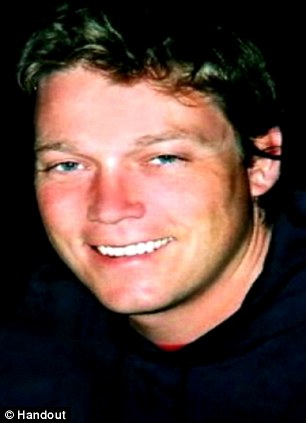

Bad drugs: Jeff Rice (left) has produced episodes of 'The Amazing Race' and other shows for American TV. He was working on a film in Uganda when he and Miss Fuller (right) took cocaine laced with fatal additives
'Ask people to pray that we come home,' Stuart Fuller, her father, told The Mercury newspaper.
Mr Fuller has been staying in the Ugandan capital of Kampala since Miss Fuller was discovered ill.
Mr Rice, American TV and film producer, was found dead bleeding from his mouth and nose after taking the cocaine in hotel room he and Miss Fuller were sharing.
The pair were in Uganda working on a film Mr Rice was producing.
Miss Fuller is currently recovering at a clinic in Kampala, but her father said she needs medical facilities and expertise only available in South Africa.
'She can regain the use of her right side, but needs to come to South Africa for treatment and to recuperate,' Mr Fuller said.
However, Miss Fuller must likely face charges of consuming cocaine in Uganda.
The case has alerted officials there to the possibility that Uganda is becoming a 'consumption destination,' a spot for adventurers and addicts to take illegal drugs with little risk of police detection.
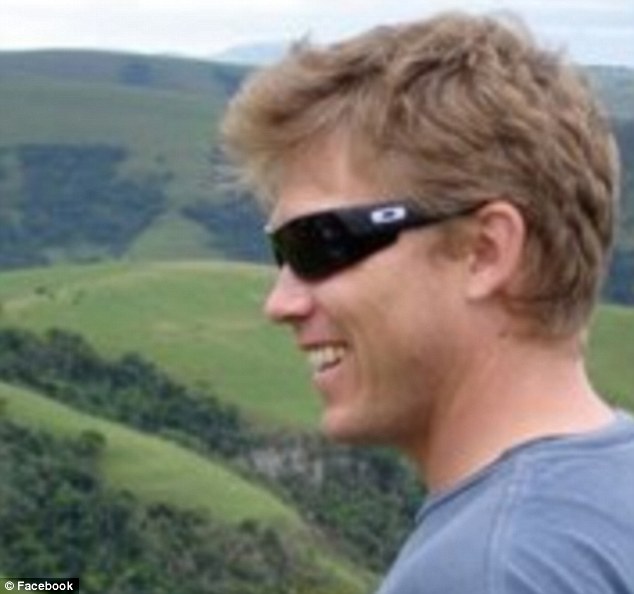
Family man: Mr Rice is the father of two small daughter, aged 7 and 1. He and his wife worked out of Durban, South Africa
Mr Fuller said he was disappointed in his daughter for taking the drugs, but says she has already paid the price for her mistake.
'I am cross, extremely cross. She’s an extremely bright woman who made a mistake,' he said.
'After this, she’ll have to prove herself. We’ve been through hell, but which father wouldn’t rush to support his daughter?'
Police arrested Moses Kalanzi, a 23-year-old 'special hire driver,' for supplying contaminated cocaine and heroin to Mr Rice.
The driver is co-operating with police and could face charges for his role in the transaction, according to Ugandan newspaper the Daily Monitor.

Work: Rice helped producers on The Amazing Race, which follows teams as they travel around the world for a prize of $1 million. He worked on its latest season
'There was constant communication between the special hire driver and Rice on phone about the purchase of the drugs,' said a police spokesman. 'So we want to know the source of the drugs and how it is trafficked into the country.'
Father-of-two Mr Rice, 39, who worked on the series The Amazing Race, was discovered slumped over a table bleeding from his nose and mouth at the Serena hotel in the capital, Kampala.

Family: Miss Fuller's father Stewart Fuller traveled Kampala in the hopes of taking his daughter back to south Africa for treatment
An official toxicology report confirmed the narcotic with a 'lethal additive' was in Mr Rice’s blood, dispelling initial suspicions he had been poisoned by attackers or that he had swallowed it to conceal the drugs from police.
Mugenyi, the Ugandan police spokesman, said: 'Rice… used cocaine which had lethal additives and that’s what killed him.'
Brad Nathanson, a private investigator and friend of Mr Rice, said he had been shown the toxicology report by police and there was no evidence of 'foul play' in Rice’s death.
He said: 'In fact it was as a result of buying bad drugs, cocaine to be specific … it was a bad concoction.'
'I have read the toxicology report … it shows that there were small traces of cocaine in their blood and urine.'
Mr Nathanson said he had traveled to Uganda as a favor to the Rice family following rumors he had been poisoned.
Miss Fuller was found unconscious at the same time Mr Rice’s body was discovered
Mr Rice and Ms Fuller were believed to have voluntarily consumed the drugs, meaning she could be prosecuted under Uganda’s drug laws. Drug use can carry a jail term in Uganda.
As well as the Amazing Race, Mr Rice also worked on Animal Planet's Whale Wars and the South African version of The Biggest Loser.
He is survived by daughters, ages 2 and 7.
AN AUSTRALIAN man is facing the death penalty after being arrested in Malaysia for allegedly trying to sell methamphetamine. Malaysian police have confirmed a West Australian man ''tentatively charged'' with trying to sell 225g of methamphetamine could be executed. Malaysian Police Narcotics Supt Nafisah Adam said today that a former Perth man, 32, was being held in custody, along with three local men. They were all arrested on Thursday over a string of alleged drug offences. Supt Nafisah said the Australian man had been caught with a large quantity of methamphetamine ''in his hands'' at a coffee shop in the Malaysian capital of Kuala Lumpur. He added that a search of his nearby house had uncovered a ''smaller volume'' of drugs and led to the arrests of three local men. Under Malaysian law, a person convicted of possessing more than 50g of methamphetamine is declared a drug trafficker and faces a mandatory death sentence. Supt Nafisah said the arrests were part of an ongoing anti-drugs operation, and that the men had been under surveillance for some time before their arrests. ''It's part of a team of investigation that was carried out,'' she said. While the Australian and the other men had been ''tentatively charged'', official charges could follow chemical analysis of the seized substances. ''He is being held and tentatively we will charge him, but it depends on the contents of the substance on him,'' Supt Nafisah said. ''But I can say (if the drugs are confirmed), definitely he will be charged.'' Supt Nafisah said under Malaysian law, the men could be held in custody for up to 14 days without charge while police continued to investigate them. They are expected to initially appear in a magistrates court in Kuala Lumpur, but could be transferred to a higher court if serious charges are laid. ''If it's confirmed drugs, his case will be transferred to a higher court,'' Supt Nafisah said. ''Yes, they could face the death penalty if convicted.'' Australia's Department of Foreign Affairs and Trade confirmed today that the Australian man had been arrested on March 1. ''Malaysian authorities arrested a 32-year-old Australian man from Western Australia for allegedly selling methamphetamines,'' a DFAT spokesperson said in Canberra. ''Consular officials in Kuala Lumpur are seeking access in order to offer consular assistance to the man. ''It is possible that he will be charged with Trafficking in Dangerous Drugs, Section 39B of the Dangerous Drugs Act 1952, which carries a mandatory death penalty upon conviction.'' The Australian's father was reported to have said he was unaware of his son's arrest and had not been able to contact him recently. It is believed that until six months ago, he had lived with his father in the southern Perth suburb of Success, but had then moved into an apartment in the central suburb of Mt Lawley. Malaysian police federal narcotics director Noor Rashid Ibrahim was reported as saying the Australian man intended to smuggle drugs back to Australia. Supt Nafisah said she was not aware if the man's father planned to travel to Malaysia to see his son. Malaysia has executed three Australians for drug offences in recent decades. Kevin Barlow and Brian Chambers were hanged in July 1986, followed by Michael McAuliffe in June 1993. Asked about the case today, Acting Foreign Minister Craig Emerson declined to go into details. ''We will provide, as we always do, every consular assistance to every Australian citizen but beyond that, it would be wrong for me to speculate about the nature and causes of the apprehension of this man,'' Dr Emerson told reporters in Canberra. ''Let the justice system take its course.''


Popular Posts
-
 Red Scorpion Gang Leaders are Jonathan, Jarrod and Jamie Bacon These 3 brothers are believed to be in the top ranks of a drug-trafficking gr...
-
 "We're just here to support our guys," Charles "Pee Wee" Goldsmith, a Hells Angel from Nevada, said last week. Many ...
-
The Sons of Silence, one of the country’s biggest outlaw biker gangs. With its headquarters in Colorado, the Sons of Silence (SOS) are known...
-
 Aryan Brotherhood in other names AB,Brand,Tip,Alice,Alice Barker were formed in California's San Quentin State Prison.The Aryan Brotherh...
-
 Timothy “Fuzzy” Timms, a 45-year-old member of the Hells Angels Motorcycle club, stood up Monday for his First Amendment right to freedom o...
-
Glaswegian was killed as rival gangs armed with blades, including a Samurai sword, clashed in a terrifying street fight.Police were last nig...
-
 Jerry Turcotte, 48, was arrested by Peru's federal police in May and escaped from a jail cell in Lima on Sept. 22 after overpowering a j...
-
Gov. Mike Beebe announced Friday his intention to grant pardons to nine Arkansans, including a man who claimed to have founded Little Rock’s...
-
The chronology of cannabis -------------------------------------------------------------------------------- 2737 BC: Cannabis referred to as...
-
 motorcycle gang Hells Angels, have made the Dominican Atlantic resort town Cabarete their home in the Caribbean. “They're impossible to ...
-
-
Gang boss burns out garda sergeant's car while he plays football - Gardai have launched a major investigation after a car belonging to a popular sergeant was burnt-out in a grudge attack linked to gangland thugs. SHARE T...
-
Lionel Messi to be prosecuted for alleged tax evasion - A Spanish court will push ahead with prosecuting the Barcelona forward Lionel Messi for alleged tax evasion despite a recommendation from the public pros...
-
Spanish police have arrested a Colombian drug boss dubbed ‘The Mouse’, the alleged leader of a major cocaine smuggling gang accused of 400 killings - Spanish police have arrested a Colombian drug boss dubbed ‘The Mouse’, the alleged leader of a major cocaine smuggling gang accused of 400 killings, offi...


